.



To start an LLC in South Dakota, file articles of organization with the Secretary of State and appoint a registered agent with a South Dakota registered office. After the state approves the filing, organize your LLC’s records and check which tax, employer, license, and permit rules apply to your business. South Dakota LLCs must also file annual reports, so track the due date and fee.
Key takeaways
- A South Dakota LLC must file articles of organization and maintain a registered agent and registered office in the state. Online filing costs $150; paper filing costs $165.
- Check that your LLC name is distinguishable in the Secretary of State’s records. A name reservation is optional, and a fictitious name filing is separate from LLC formation.
- South Dakota doesn’t require you to file an operating agreement, but a written agreement can document members’ ownership, management, and decision-making arrangements.
- An LLC with more than one owner generally needs a federal tax ID. Other tax, employer, sales tax, license, and permit obligations depend on what it does and where it operates.
- Keep your registered agent information current and track annual reports and any applicable license or fictitious name renewals.
Step 1: Choose a name for your South Dakota LLC
Choose a name with an allowed LLC designator that is distinguishable from other names in the South Dakota Secretary of State’s records. Search the state business database before filing. A name reservation is optional. If your LLC regularly uses a different name, the fictitious name filing is separate from LLC formation. LegalZoom’s free business name search can help you look for possible conflicts.
Free South Dakota Business Name Check
Starting a business? Use our free name check tool to check your business name against the South Dakota Secretary of State records.
By clicking "Check Availability," I agree to LegalZoom's Terms of Use. This search is a preliminary check of state databases and does not include variations or trademarks. Results do not guarantee name availability or compliance with legal requirements.
What are South Dakota’s LLC naming requirements?
Include "limited liability company" or "limited company" in the name, or use a permitted abbreviation such as LLC, L.L.C., LC, or L.C. South Dakota allows "Ltd." for "limited" and "Co." for "company".
An LLC name must be distinguishable in the Secretary of State’s records from the names of other covered entities.
Some words may require additional approval or may not be available for every business. Check the Secretary of State instructions before using a restricted term.
The Secretary of State applies its statutory name-distinguishability rule to names in its records. Search for possible conflicts, but remember that the state’s review determines whether a name meets the rule.
How do you search the South Dakota business name database?
Use the Secretary of State’s business search to look for your proposed name and close variations. Individual business searches are free. Try your exact name, then search versions with different spellings or without the LLC designator.
Can you reserve a business name in South Dakota before filing?
You can reserve an available name for 120 days by filing an application for reservation of name with the Secretary of State. The fee is $25. Reservation is optional; you can also proceed with your formation filing.
Do you need an alternate business name for your South Dakota LLC?
If your LLC regularly does business under a name other than its legal name, file a fictitious name registration before using it.
South Dakota allows electronic filing through the Secretary of State or paper filing with a Register of Deeds. Renew the statement every five years. The filing fee is $10. Use the Secretary of State’s fictitious name portal.
Step 2: Choose a South Dakota registered agent
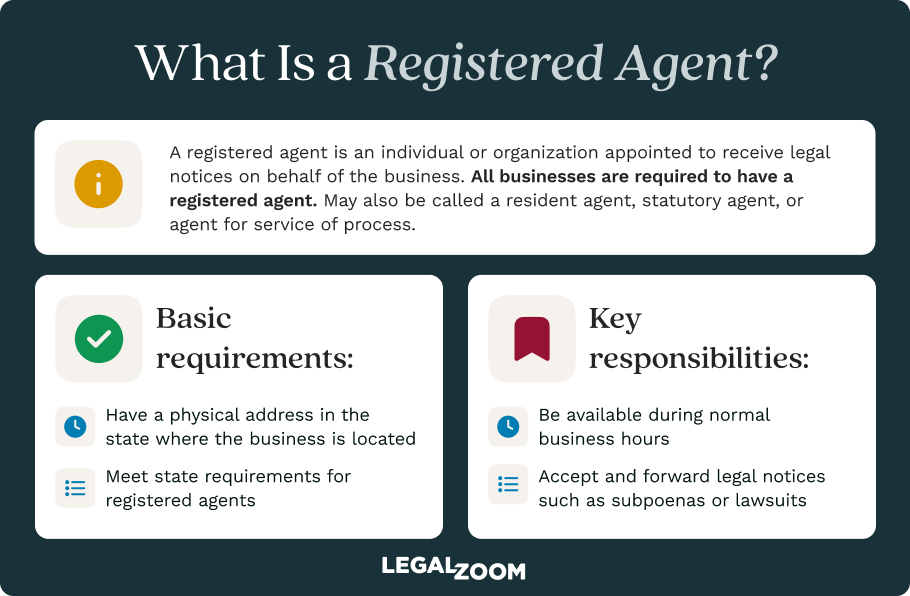
Every South Dakota LLC must maintain a registered agent and registered office in the state. The agent receives service of process and official notices, so choose an eligible person or service that agrees to serve and can reliably forward them. The registered office address may appear in public records, so consider the privacy and availability implications if you’re thinking of serving as your own agent. LegalZoom’s registered agent services are another option.
Who is eligible to serve as a registered agent in South Dakota?
South Dakota law distinguishes commercial and noncommercial registered agents. Check the statutory definitions to confirm that the person or organization you choose qualifies.
A commercial registered agent is listed with the Secretary of State under South Dakota’s registered agent rules.
The registered office must be in South Dakota. Its address must be a street address or a rural route box. If the LLC uses a separate mailing address, that address must also be in South Dakota. A P.O. box alone does not satisfy the registered-office address requirement.
How do you formally appoint a registered agent in South Dakota?
Name your initial registered agent in the articles of organization, and obtain the agent’s consent. Changing agents later requires a separate filing. Confirm the appointment with the agent before filing. If you use a commercial service, review its terms and instructions. If you name an individual, make sure they understand the role and agree to serve.
Can you serve as your own registered agent in South Dakota, and what are the trade-offs?
You may name yourself your LLC’s agent if you meet South Dakota’s eligibility rules and can use a qualifying South Dakota registered office. Serving as your own agent may avoid a service fee, but it will place your registered office information in public records. You’ll also need a reliable way to receive legal and state notices. Consider the privacy and coverage implications before deciding.
Step 3: File your South Dakota articles of organization
To form your South Dakota LLC, file articles of organization with the Secretary of State. Be ready to provide details such as the LLC’s name, registered agent and office, organizer, and management structure. You can file online for $150 or on paper for $165, or LegalZoom can prepare and submit the filing for you. After approval, save the state’s confirmation.
What information appears on South Dakota’s articles of organization?
The paper form asks for:
- The LLC’s name, including a required designator
- The registered agent’s name and registered office address
- The initial designated office address, which may be in or outside of South Dakota
- The organizer’s name and address
- The management structure and, if manager-managed, the initial managers
South Dakota law also requires the articles to address whether members will be liable for the LLC’s debts and whether the LLC may establish a series, with any required series terms.
Which management structure should your South Dakota LLC choose?
In a member-managed LLC, the members manage the business. Review the statute and operating agreement when deciding how authority will work.
In a manager-managed LLC, one or more designated managers manage the LLC under its governing arrangements. Document the managers’ roles and authority in the operating agreement.
Choose a structure that matches how the LLC will be managed. The filing may request identifying information about managers. Make sure the operating agreement matches your choice.
How do you file online or by mail with the South Dakota Secretary of State?
If you file online, use the Secretary of State’s business portal and review its prompts. After submitting the formation filing, wait for the Secretary of State to issue the certificate of organization before transacting business or establishing lines of credit, except for limited organizational activities allowed by law. Save the certificate and approval record.
To file by mail, download the paper articles of organization form, fill it out, and mail it with a check payable to the Secretary of State to 500 E. Capitol Ave., Pierre, SD 57501.
How long does South Dakota LLC approval take?
The Secretary of State lists a $50 expedited service, but it’s unclear whether it applies to LLC formation or paper filings. Online filings are processed immediately, while paper filings average one to three business days. Ask the office whether expedited handling is available for your filing. Processing estimates are not guarantees.
Step 4: Write a South Dakota LLC operating agreement
South Dakota doesn’t require an LLC to adopt or file an operating agreement, but one is still highly recommended. A written agreement can document ownership, contributions, management, decision-making, and create processes for when arrangements change. Keep it with your LLC’s records. LegalZoom offers a customizable operating agreement template to help you put those terms in writing.
Step 5: Get an EIN and organize your LLC’s finances
After South Dakota accepts your articles, organize the LLC’s finances and records. An LLC with more than one owner generally needs an employer identification number (EIN). A single-member LLC treated as a disregarded entity may not need a separate EIN if it has no employees or relevant excise-tax obligations and has not elected corporate tax treatment. A separate business account and clear records of member contributions and ownership can help keep finances organized. LegalZoom can help with an EIN application, or you can apply directly through the IRS for free.
Do you need an EIN for a South Dakota LLC?
An LLC with more than one owner generally needs an EIN. A single-member LLC treated as a disregarded entity may not need a separate EIN if it has no employees or relevant excise-tax obligations and has not elected corporate tax treatment. You may still choose to get one for banking or other business needs.
What documents do South Dakota banks typically require to open a business account?
A bank may ask for an EIN confirmation letter, approved articles, or an operating agreement. Requirements vary, so check with the bank before applying.
How should members document contributions and ownership?
Put the members’ agreed terms in writing in the operating agreement. Record each member’s agreed contribution, ownership share, and distribution terms so everyone can refer to the same arrangement.
Building a business is enough work as it is. We'll help you start your LLC with confidence.

Step 6: Check South Dakota tax, employer, license, and permit rules
Your tax, employer, license, and permit obligations depend on what the LLC does and where it operates. Sales and use tax or employer registrations may apply, while state and local license requirements can depend on your industry and location. LegalZoom’s Business License Report & Management service can help identify licenses, permits, and registrations that may apply. Start this research before you begin operating, and revisit it if your activities or location change.
Which licenses and permits might a South Dakota LLC need?
Requirements depend on the business activity and location. Check the relevant state licensing board and local authorities for licenses or permits that apply to your work. Don’t assume a single general license statement covers every business.
What are South Dakota’s income and sales tax rules?
South Dakota has no individual income tax, and the Department of Revenue says the state has no corporate income tax. However, sales and use tax, local taxes, and activity-specific taxes may still apply. The state sales tax rate is 4.2%. The codified rate is scheduled to become 4.5% on July 1, 2027, subject to any intervening change. Check the Department of Revenue guidance for rates and local rules.
When does a South Dakota LLC need a sales tax license or employer registration?
Businesses with a South Dakota physical presence generally need the applicable sales tax license. A remote seller without physical presence generally needs a license when gross sales in South Dakota exceed $100,000 in the current or prior calendar year. South Dakota’s Department of Labor and Regulation (DLR) requires newly established and acquired businesses to register with its Reemployment Assistance Tax Unit. Certain changes in business ownership structure also require registration within 30 days. Registration is separate from whether the business ultimately owes reemployment-assistance tax; tax liability depends on the applicable employment and wage rules.
South Dakota LLC costs and ongoing compliance
| Item | Online | By mail |
|---|---|---|
| Articles of organization | $150 | $165 |
| Annual report | $55 | $70 |
| Registered agent change (only when required) | $10 | $25 |
| Name reservation (optional) | $25 | $25 |
These are the most basic costs. Most founders also budget for an attorney, accountant, or registered agent, as well as any costs specific to their LLC.
The risks of filing a South Dakota LLC yourself
Filing your own LLC paperwork can save a service fee, but mistakes or missed deadlines can have effects beyond extra paperwork. They may delay when the LLC can begin business, leave important notices unanswered, create added tax or licensing costs, or put the LLC’s good standing at risk. These are practical risks, not a statement that you must use a filing service.
- An unsuitable registered agent arrangement can lead to missed official or legal notices. If the agent cannot receive and pass along documents, the LLC may not learn about a lawsuit or agency notice in time to respond or meet a deadline. The Secretary of State also lists failure to keep a valid registered agent as a reason a business may be administratively dissolved. Confirm the agent’s eligibility and consent, and make sure the registered office is monitored.
- Incomplete or inconsistent articles can delay filing or leave statutory questions unresolved. If required information is missing, the Secretary of State may not issue the certificate until the filing conforms to law; without a certificate, the LLC generally cannot transact business or incur business debt, apart from limited organizational activity. If the articles and operating agreement conflict about management or authority, different terms may control depending on who relies on the records, creating uncertainty about who can act for the company.
- You may miss a tax, employer, licensing, or permit requirement as your business changes. If you discover a requirement after operations begin, you may need to file overdue returns and pay tax due plus penalties and interest. South Dakota requires newly established and acquired businesses to register for reemployment assistance tax; late employer reports or payments can add penalties and interest too. If a required license or permit is missing, the affected activity may need to wait until approval is in place. Check with relevant state and local agencies when your activities, location, or workforce change.
- A missed annual report can lead to delinquency and administrative dissolution proceedings. That can add a late fee. If the LLC is administratively dissolved, getting it back into good standing requires filing all delinquent reports, paying applicable fees, and obtaining a tax-clearance certificate if it is a for-profit entity. Verify the due date listed for your LLC each year.
How to start your South Dakota LLC with LegalZoom
LegalZoom can help you form your South Dakota LLC by checking your proposed name against the state’s business database and preparing and filing your articles of organization with the Secretary of State. If you choose LegalZoom as your registered agent, its South Dakota address can help keep your personal address off the public record.
You can also get a customizable operating agreement and assistance with your EIN application. Annual report reminders and filing support come standard, and LegalZoom’s service fees are separate from South Dakota’s state filing fees.
Find the right state to form an LLC
Find the right state to form an LLC
Every state has different rules, costs, and considerations for LLC formation.


South Dakota LLC FAQs
What is the downside of starting an LLC in South Dakota?
Ongoing compliance is the main downside. Every South Dakota LLC must file an annual report and pay the fee while it remains active. Missing a deadline can lead to delinquent status or administrative dissolution. This can be especially challenging for founders who struggle to keep records current or expand into other states, where foreign LLC registration and additional fees may apply.
Is a South Dakota LLC worth it for a small business?
Whether it’s a good fit depends on where you operate and what your business needs. A South Dakota LLC generally makes company debts the company’s responsibility—members and managers are not personally liable solely because of their status. South Dakota has no individual or corporate income tax, but it does impose a bank franchise tax on certain financial institutions. Federal tax treatment depends on the LLC’s classification, so members of an LLC taxed as a partnership may owe tax on their share of income even if it is not distributed.
How do you dissolve a South Dakota LLC?
An LLC may dissolve under its operating agreement or South Dakota law. After winding up its affairs, it may file articles of termination with the Secretary of State. LegalZoom’s dissolution service includes drafting and filing your dissolution paperwork with the state.
Does an out-of-state LLC need to register before doing business in South Dakota?
Generally, yes. A limited liability company formed under another state’s law may not do business in South Dakota until it obtains a certificate of authority from the Secretary of State. South Dakota law lists activities that do not count as doing business for this requirement, including certain internal affairs activities, maintaining accounts in financial institutions, and transacting business in interstate commerce.
Can I form a South Dakota LLC if I live in another state?
Yes. South Dakota’s LLC formation statute does not list owner residency as a condition for forming an LLC; it instead specifies the information required in the articles of organization, including an initial designated office and registered agent information. You must still meet those South Dakota filing requirements, and forming in South Dakota does not answer whether another state where you operate requires separate registration. Check the other state’s rules.
What is a South Dakota series LLC, and what does each series need to do to keep assets and liabilities separate?
South Dakota law allows an LLC’s operating agreement to establish a series with separate rights, powers, or duties tied to specified property or obligations. Liability separation for a series is conditional: the LLC must maintain separate records for that series and account for its assets separately, provide for the liability limitation in its operating agreement, give notice in its articles, and obtain a certificate of designation for each series claiming limited liability.
What information do I need to file a South Dakota LLC annual report?
Have the South Dakota Secretary of State Business ID ready. The filing instructions say you’ll need it to start an annual report and offer a search tool if you don’t know the ID. The report asks for the LLC’s name, formation jurisdiction, principal office, and registered agent details, plus governor information when applicable. A member-managed LLC need not list its governors’ names and addresses. The report asks whether the LLC owns agricultural land; if it does, the report also asks whether the LLC has any foreign beneficial owners and may require follow-up details.
- Annual-report due dates are in transition: Current state guidance lists the first day of the LLC’s anniversary month, but current law sets a January 31 deadline. A scheduled change will let LLCs choose an anniversary-month schedule or January 31. Check the due date shown for your LLC in the Secretary of State’s business information search or confirm it with the office.
How can I check whether a South Dakota LLC is active?
Use the Secretary of State’s business information search to look up an LLC by name or Business ID. The state says you can search, view, and print individual entity records for free. The search also includes an “Active Entities Only” filter, which can help narrow results. If the record shows a dissolved or revoked status, follow the state’s reinstatement instructions before treating the LLC as active again.